
What Happens Inside an iPhone After Water Damage?
September 15, 2026
iPhone Microphone Not Working During Calls? Fix It Fast
September 18, 2026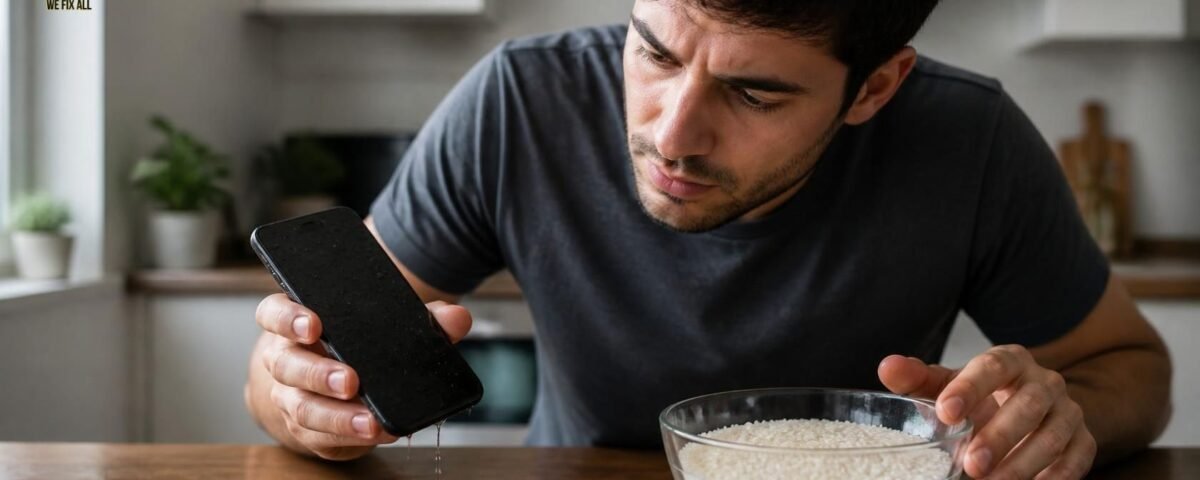
No. Putting a wet iPhone in rice is not a reliable way to remove moisture and may even create additional problems. Rice can leave small particles and residue around ports and openings, while proper air drying and professional repair are safer options.
If your iPhone has been exposed to water, skip the rice and focus on safe drying steps to reduce the risk of further damage.
Why People Believe the Rice Trick Works
The idea seems simple: rice is dry and absorbs moisture, so placing a wet phone inside rice should help dry it. This method has been shared online for years, and many people believe it helped their devices recover.
However, a phone may recover simply because it was given enough time to dry. That does not necessarily mean the rice caused the recovery.
Why You Should Avoid Putting an iPhone in Rice
Rice may seem like an easy solution, but it can create additional risks for a water-damaged iPhone.
| What to Avoid | Why It Can Be Risky |
| Use a hair dryer | Heat may damage internal components |
| Use compressed air | Can push moisture deeper into the device |
| Insert cotton swabs into the port | May push debris further inside |
| Put the iPhone in rice | Rice particles and residue can enter openings |
For this reason, using rice is generally not recommended when dealing with a wet iPhone.
Why Rice Can Actually Damage Your iPhone
There are two main concerns when using rice:
1. Small particles can enter the phone.
Broken rice grains and fine dust can get into the charging port, speaker openings, or other small gaps. Removing those particles can become another repair issue.
2. Rice can leave residue.
Rice may leave starch or dust around delicate areas of the device. Instead of helping, this residue can interfere with ports and connections.
A clean, dry environment is a safer approach when allowing a lightly wet phone to dry.
Already Put Your iPhone in Rice? Here’s What to Check
If you’ve already placed your iPhone in rice, don’t panic. Carefully check the device before trying to use or charge it.
- Inspect the charging port: Look for visible rice particles or dust.
- Don’t charge it while wet: If moisture is still present, avoid connecting a charging cable.
- Keep the phone in a dry area: Allow it to dry naturally with good airflow.
- Check for problems: Look for charging issues, muffled speakers, unexpected shutdowns, or other unusual behavior.
If the iPhone continues showing problems after water exposure, professional iPhone repair from WeFixAll can help identify whether moisture has affected the device.
What to Do Instead: Step by Step
If your iPhone gets wet, follow these basic steps:
- Unplug everything: Disconnect charging cables and accessories.
- Turn the device off: Avoid unnecessary use while moisture may still be present.
- Hold the port downward: Gently tap the phone against your hand to help excess liquid drain.
- Let it air-dry: Place the iPhone somewhere dry with good airflow.
- Avoid external heat: Don’t use a hair dryer, heater, or other direct heat source.
- Wait before charging: Give the device sufficient time to dry before reconnecting a charger.
If your iPhone does not return to normal after drying, consider getting it checked by WeFixAll instead of repeatedly trying DIY methods.
Rice vs. Air-Drying vs. Professional Repair
| Method | Potential Benefit | Risk | Best For |
| Rice | Limited moisture absorption | Particles and residue | Not recommended |
| Air-drying | Allows moisture to evaporate naturally | Low when done correctly | Minor exposure |
| Professional repair | Inspection and repair of affected components | Repair cost | Persistent water-damage problems |
For more serious water exposure, professional assessment can be useful because moisture may remain inside the phone even when the outside appears dry.
How Long Should You Wait Before Charging Again?
Avoid charging an iPhone while there may still be moisture inside the charging port. Allow it to dry naturally in a dry, well-ventilated location.
If the phone continues showing charging problems or does not respond normally after drying, don’t keep experimenting with household drying methods. WeFixAll can inspect the device and determine whether professional iPhone repair is needed.
What Should You Do If Your iPhone Still Doesn’t Work?
Water damage can affect different parts of an iPhone, including the charging port, speakers, battery, display, and internal components.
If basic drying does not solve the problem, professional inspection is the safer next step. WeFixAll provides phone repair services in Canada, giving you an option to have your water-damaged device assessed rather than relying on rice or other DIY methods.
The “3 P’s”: A Simple Checklist
When your iPhone gets wet, remember these three steps:
- Power off — Stop using or charging the phone.
- Pat dry — Gently dry the outside and keep the charging port facing down.
- Patience — Give the device enough time to dry naturally.
Avoid rice, direct heat, and unnecessary handling while the phone is still wet.
Conclusion
Putting an iPhone in rice is not a dependable way to fix water damage and can introduce particles or residue into the device. Instead, power off the phone, gently remove excess water, and allow it to dry naturally. If your iPhone still has charging, speaker, screen, or other issues after water exposure, WeFixAll can provide professional iPhone repair in Canada to help assess the damage.
FAQs
Does putting a wet iPhone in rice actually work?
Rice is not a reliable solution for water-damaged iPhones. It may also introduce dust, broken grains, or residue into the charging port and other openings.
Why should you avoid putting an iPhone in rice?
Rice particles can enter small openings and may leave residue around sensitive components. Safe air-drying is a better approach than burying the phone in rice.
How long should you leave a wet iPhone drying?
Give the device time to dry naturally in a dry area with good airflow. Avoid charging it while moisture may still be present.
What can I use instead of rice to dry my iPhone?
The safest basic approach is to remove excess water and allow the phone to air-dry naturally. Avoid direct heat, compressed air, and inserting objects into the charging port.
Can water damage still happen to a water-resistant iPhone?
Yes. Water resistance is not permanent or unlimited. Exposure to liquids can still cause problems, particularly if the device has been damaged or its protective seals have weakened.
Is it OK to use a hair dryer on a wet iPhone?
It is better to avoid using a hair dryer or direct heat. Heat and strong airflow can potentially cause additional damage or push moisture further into the device.
