
Cracked iPhone Screen Repair Fast Affordable and Reliable Solutions
December 21, 2025
iPhone Screen Replacement Cost Process and What to Expect
December 24, 2025Original vs OEM vs Copy iPhone Screens: What’s the Difference?
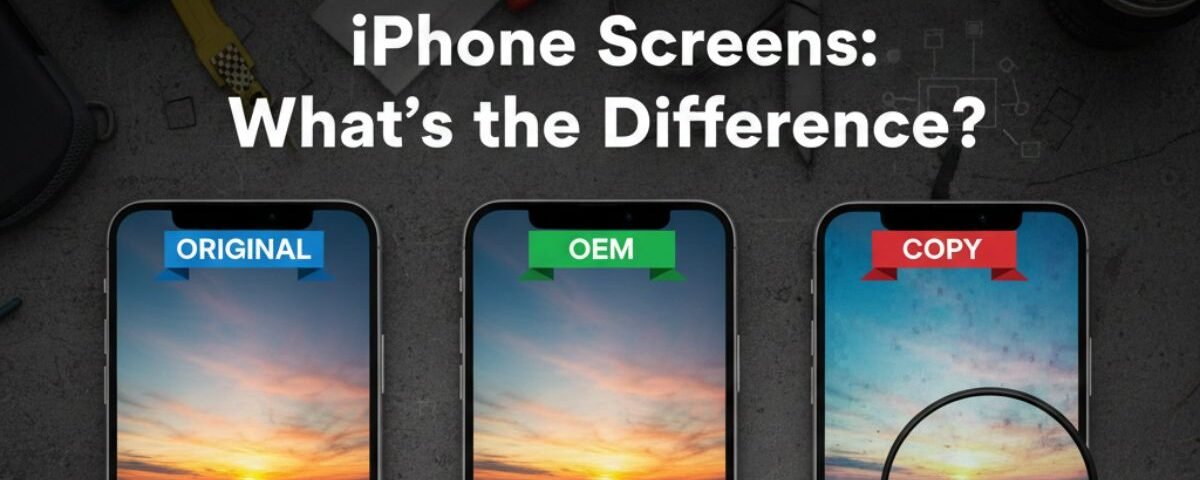
When your iPhone screen cracks or malfunctions, choosing the right replacement can be confusing. iPhone screens come in three main types: Original, OEM, and Copy. Each type has its own features, quality, and price point. Original screens are made by Apple and offer the best performance and reliability. OEM screens are manufactured by third-party companies but meet Apple’s specifications. Copy screens are cheaper alternatives, often lower in quality and durability. Understanding the differences can save you from costly mistakes and ensure your phone works smoothly. Whether you prioritize longevity, display quality, or budget, knowing these options is essential. Let’s explore what sets these screen types apart and which one might suit your needs.
Table of Contents
ToggleBreaking Down the Types of iPhone Screens
When replacing a screen, you are not just changing glass. You are replacing a complex system. It includes the display, touch sensor, and protective layers. There are three main types of iPhone screens. Let’s explain them simply.
Original Screens: The Gold Standard
An original screen is the same one your iPhone came with. Apple or its certified partners make these screens using premium materials. This is the option you get when repairing directly through Apple.
These screens offer perfect performance. Colors look rich and natural. Touch response feels instant and smooth. Durability is excellent. Your phone feels brand new again.
They cost more, but they deliver the best results. If quality matters most, this is the safest choice.
OEM Screens: Balancing Quality and Cost
OEM screens are made by the same manufacturers that supply Apple. However, they are not sold through Apple directly. Think of it like buying the same product from a different store.
OEM screens offer near-original quality at a lower price. Colors remain sharp. Brightness is strong. Touch sensitivity stays accurate.
For many people, OEM screens are the sweet spot. You get great quality without paying the full Apple price.
Copy Screens: What You Need to Know
Copy screens, also called aftermarket screens, are made by third-party companies. They have no connection to Apple. Lower-quality materials help keep prices low.
While tempting, these screens come with risks. Colors often look dull. Brightness is weaker. Touch response may lag. Durability is poor.
A copy screen can make a premium iPhone feel cheap and frustrating.
How to Spot a Fake iPhone Screen
Some repair shops may claim a screen is original when it is not. Knowing the signs helps protect you.
First, look at the display. Original and OEM screens have deep blacks and vibrant colors. Copy screens often appear washed out or bluish.
Next, test touch sensitivity. A quality screen responds instantly. Missed taps or delays are warning signs.
Also, check fingerprint resistance. Original screens resist smudges. Copy screens attract fingerprints and scratch easily.
What Are the Pros and Cons of OEM vs Copy Screens?
An OEM screen offers excellent performance and durability. It feels like the original. The downside is a higher price.
A copy screen costs less upfront. However, performance is weaker. Breakage happens more easily. Long-term costs often increase due to repeat repairs.
Choosing quality usually saves money in the long run.
The Science Behind iPhone Screens

iPhone displays are advanced because of smart engineering. Two key features matter most: Gorilla Glass and the Retina Display.
Gorilla Glass is chemically strengthened. It resists scratches and small drops better than regular glass. It is tough, though not unbreakable.
The Retina Display uses very high pixel density. This makes images sharp and text crystal clear. Many copy screens use lower DPI, which causes blurry visuals.
Water resistance in newer iPhones can also fail if a low-quality screen is installed.
The Cost of Cutting Corners: Risks of Copy Screens
Cheap screens often create hidden problems. Battery drain increases. Touch issues appear. Display clarity drops.
They also break more easily. A small fall can cause another crack. That means paying for repairs again.
Using unauthorized parts may also void your Apple warranty. This can lead to higher costs later.
Choosing the Best Repair Service in Canada
A good iPhone screen repair service in Canada should be honest and clear. They should explain screen options openly.
Ask about warranties. Reliable shops stand behind their work. Read reviews. Consistent positive feedback matters.
A trustworthy repair shop values quality and customer satisfaction.
Additional Tips for iPhone Screen Maintenance
Protect your new screen. Use a tempered glass screen protector. It absorbs impact and saves the display.
Choose a protective case with raised edges. It helps during face-down drops.
Clean your screen with a microfiber cloth. Avoid harsh chemicals. Proper care extends screen life.
Conclusion
Choosing the right iPhone screen replacement depends on your priorities. Original screens guarantee the best performance and longevity but come at a higher price. OEM screens offer a balance between quality and cost, making them a reliable alternative. Copy screens are the cheapest but often compromise display clarity and touch sensitivity. By understanding the differences, you can make an informed decision and extend your iPhone’s lifespan. Always weigh quality against price before deciding.
FAQs
An Original iPhone screen is manufactured by Apple or authorized Apple suppliers. These screens match the exact specifications of your iPhone model, including color accuracy, brightness, touch sensitivity, and durability. Original screens also support features like True Tone and 3D Touch seamlessly. While they are the most expensive option, they provide the closest experience to a brand-new iPhone. Using an Original screen ensures maximum compatibility and reliability.
OEM stands for Original Equipment Manufacturer, meaning the screen is made by a third-party company that follows Apple’s specifications. While the quality is close to Original screens, some minor differences may exist in color tone or brightness. OEM screens are usually cheaper than Original screens, making them a cost-effective option. They generally provide reliable performance and touch sensitivity but may not fully support all Apple features. OEM screens are a good choice for those who want quality without paying Apple prices.
Copy iPhone screens are the cheapest option, often manufactured by unofficial companies. While they look similar to the original, their build quality, touch responsiveness, and display clarity are usually lower. Copy screens may develop issues like dead pixels, discoloration, or reduced sensitivity over time. They are suitable for temporary replacements or budget constraints but are not recommended for long-term use. Investing in a higher-quality screen often saves money and frustration in the long run.
You can identify the screen type by checking display quality, touch responsiveness, and features like True Tone or brightness consistency. Original screens have flawless display and touch, OEM screens are close but may have slight differences, and Copy screens often have visible flaws or lack certain features. Serial numbers and packaging can also provide clues if sourced from authorized suppliers. Professional technicians can confirm the screen type accurately during replacement.
If you want a balance between performance and price, OEM screens are usually the best choice. They offer near-original quality and touch sensitivity at a more affordable rate. Original screens are ideal for those who prioritize maximum reliability and longevity. Copy screens should only be considered for short-term or budget-conscious solutions. Ultimately, your choice depends on how much you value display performance, durability, and overall phone experience.
